
What are we doing?
BencHEIT is a survey on IT costs and volumes of higher education institutes. Its participation is voluntary and free of charge. The survey has been invented and is being developed and managed by CIOs (within EUNIS community).
Why are we doing this?
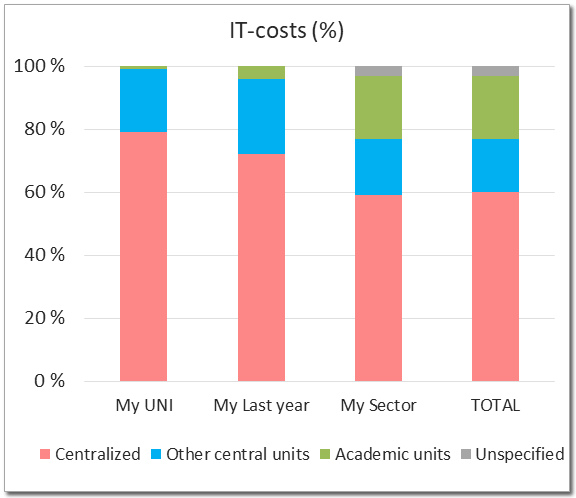
The BM-survey will assist You to understand the institute’s IT cost structure in three dimensions:
-
- By organizational group: centralized IT, other centralized units (e.g. library, finance) and substance units like faculties and research centers.
-
- By services: e.g. networking, teaching, audio visual
-
- By accounts
Analysis and comparison
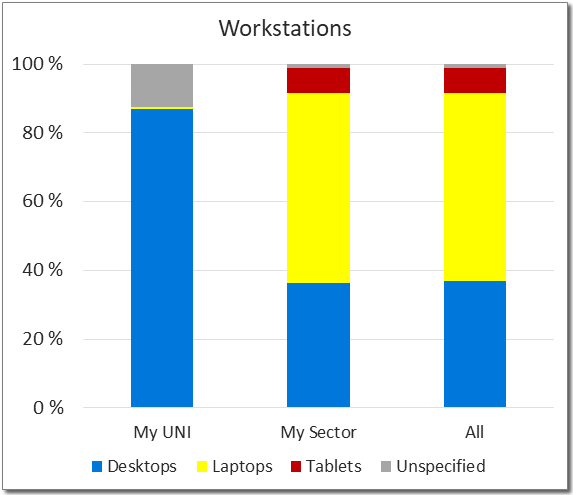
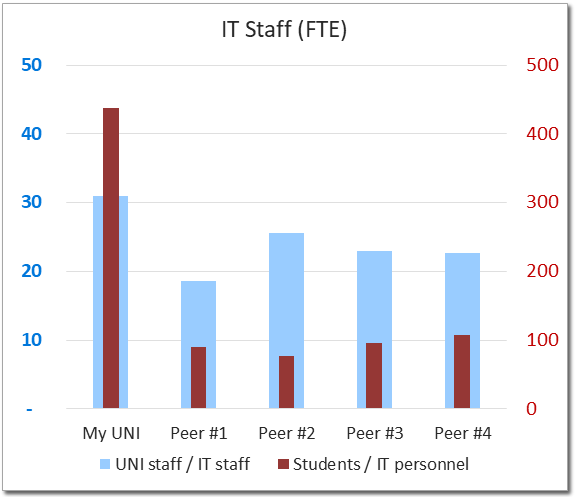
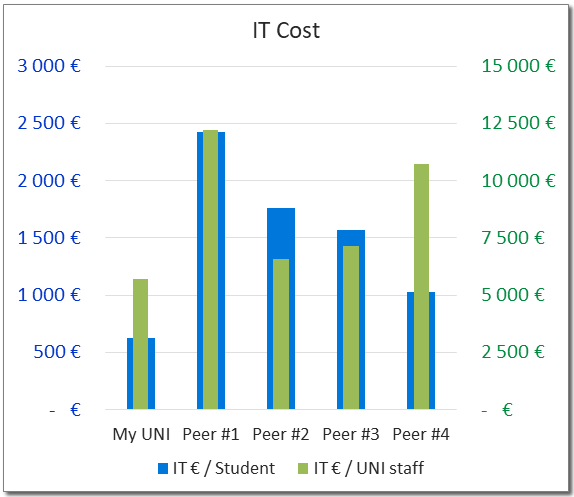
In the BM analysis you can either compare your indicators against your previous year results and the average values of all others in same higher education sector, or you can pick up four of your fellow organizations and compare yourself to them.
BM analysis also gives you possibility to see longitudinal development of your indicators if you have participated at least three times during last five years.
Below are few samples of the charts.
When?
The new survey round starts with a workshop usually in November.
In the beginning of each BencHEIT round, we will host an online launch session for all the participants. The launch webinar is in the end of January.
The data gathering then goes on until the end of April. The checkout process, done by the BM Project Group, is right after the deadline and after the changes and corrections, the final BM Analysis is ready by the end of May and will be presented at the annual EUNIS congress in June. For the participants, there is a separate webinar where we look deeper into the results.
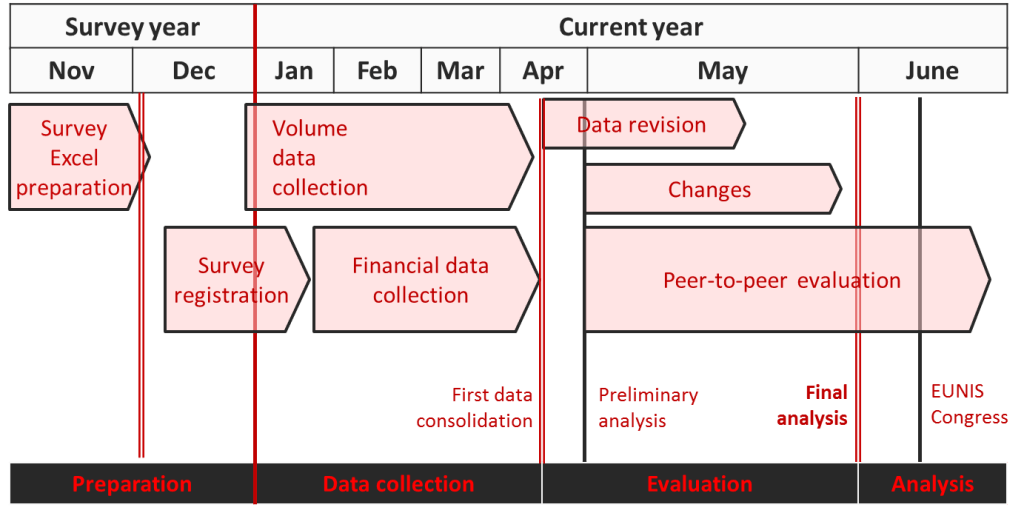
BM2025 has started January 2026. DL for completing survey is 28th April 2026.
You can contact the BencHEIT project group:
How does your IT spending compare to your European peers?
You are under constant pressure to do more with less. IT costs keep rising, digital expectations from students and staff continue to grow, and senior management increasingly asks a simple but difficult question:
“Why does our IT cost what it costs?” Without credible peer data, that question is hard to answer.
The challenge many CIOs face
Across European higher education, CIOs are navigating the same reality:
-
- IT budgets are increasing faster than overall institutional budgets
-
- Cybersecurity, cloud services, data, and digital learning demand sustained investment
-
- Staffing shortages and rising personnel costs put pressure on internal teams
-
- Senior leadership wants justification, comparisons, and clear explanations
Internal data alone is no longer enough. What is missing is trusted, comparable insight into how peers organise, staff, and fund IT.
What is BencHEIT?
BencHEIT is a European, CIO-led benchmarking survey on IT costs, staffing, sourcing, and organisation in higher education. It is:
-
- Designed by CIOs, for CIOs
-
- Focused exclusively on higher education
-
- Coordinated within the EUNIS community, ensuring independence and relevance
BencHEIT is not a vendor report and not a consultancy exercise. It is a peer benchmark built on shared data and shared learning.
What the 2024 data shows
The 2024 BencHEIT results highlight just how different IT realities can be, even among comparable institutions:
-
- IT spending varies enormously between institutions of similar size and profile
-
- Staff costs remain the largest driver of IT budgets across Europe
-
- Levels of centralisation differ widely, with clear implications for efficiency, control, and resilience
-
- Institutional scale alone does not explain cost differences: organisation and sourcing matter
These findings challenge assumptions and provide concrete starting points for strategic discussion.
Why institutions participate
Participants use BencHEIT to:
-
- Benchmark their IT spending against similar European institutions
-
- Bring evidence-based peer data into budget negotiations and strategic planning
-
- Understand why costs differ: organisational models, sourcing choices, and scope
-
- Learn directly from peers facing the same challenges, not from vendors or consultants
For many CIOs, BencHEIT becomes a shared reference point when talking to rectors, boards, and finance departments.
How to join
Participation is open to higher education institutions across Europe.
By taking part, you receive:
-
- Full access to benchmark results
-
- The ability to compare with relevant peer groups
-
- Opportunities for confidential peer discussion within the EUNIS community
If you want to move from explaining IT costs defensively to discussing them strategically, BencHEIT gives you the data to do so.
Why understanding IT costs matters more than ever
As higher education becomes increasingly digitalised, understanding IT costs has never been more essential. From hybrid teaching and research infrastructure to cybersecurity, data platforms, and student systems, IT now underpins every aspect of institutional operations.
Without a clear view of where resources are going, it becomes difficult to explain costs, prioritise investments, or plan sustainably.
Understanding your IT cost structure helps you to:
-
- Identify key cost drivers and improve efficiency
-
- Justify IT investments with solid, comparable data
-
- Support strategic planning and multi-year budgeting
-
- Compare yourself with peers nationally and internationally
-
- Strengthen accountability and transparency across the institution
How BencHEIT helps you understand your IT costs
BencHEIT provides a structured, comparable view of IT expenditure through three complementary perspectives:
By organisational group
Understand how IT costs are distributed across your institution:
-
- Central IT services
-
- Other central units (such as library or finance)
-
- Academic units, including faculties and research centres
This helps clarify responsibilities, levels of decentralisation, and governance models.
By service
Analyse spending by the services IT delivers, such as:
-
- Networking and infrastructure
-
- Teaching and learning technologies
-
- Audiovisual services
-
- Research IT and data services
-
- Other digital and support services
This perspective links costs directly to institutional missions.
By account
Use detailed financial categorisation to map resources and expenditure, supporting alignment with internal accounting structures and audit requirements.
What participants can do with the data
BencHEIT is not a one-off snapshot. Participants can:
-
- Compare key indicators with previous years
-
- Benchmark against sector averages
-
- Select up to four peer institutions for in-depth comparison
-
- Track long-term trends (available after three or more years of participation)
This makes BencHEIT a powerful tool for both operational insight and long-term strategy.
Why BencHEIT is different
-
- Free of charge – open to all higher education institutions
-
- CIO-driven – developed by and for higher education IT leaders
-
- Comparable and actionable – helps make sense of complex IT spending
-
- Collaborative community – exchange insights with peers across Europe
-
- Confidential and trusted – your data stays within the participant network
Many participating organisations are already members of EUNIS, and institutions are encouraged to join the EUNIS community to access even more networking and knowledge-sharing opportunities.
Join the next BencHEIT survey round
The new BencHEIT survey round began in January 2026, with a launch webinar on 29 January, and is open until end of April to submit data.
Participation is open to all higher education institutions, including universities, universities of applied sciences, and research institutions, regardless of size or location.
By joining BencHEIT, you become part of a growing European network of IT and digital leaders sharing data, insights, and best practices.
Don’t miss your chance to benchmark, learn, and lead.
